Most golfers spend hours researching clubs, balls, and training aids but give almost no thought to how they organize their bag. That's a mistake. A well-packed golf bag saves time between shots, prevents club damage, and distributes weight evenly enough that carrying or carting 18 holes doesn't wreck your body.
Start With the Club Layout
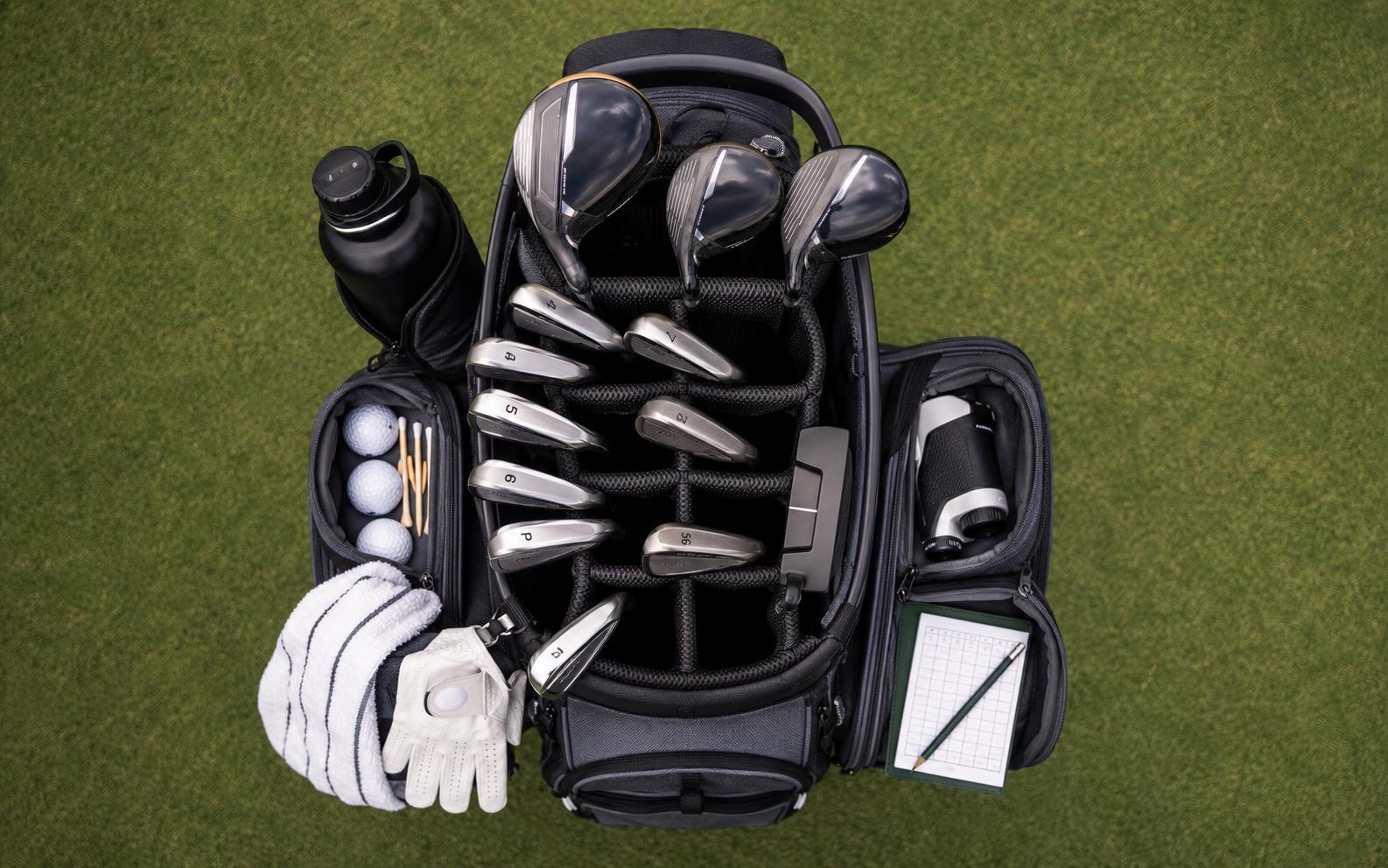
Your bag has dividers for a reason. The general rule is longest clubs at the top, shortest at the bottom, with the putter getting its own dedicated slot. Driver and woods go in the top section. Long irons and hybrids fill the middle. Short irons and wedges sit at the bottom where they're easiest to grab for approach shots.
This arrangement isn't just about neatness. When clubs tangle together, graphite shafts can crack and clubhead finishes get scratched. Keeping them separated in their proper slots extends the life of equipment that probably cost you a few thousand dollars. A 14-way divider bag makes this effortless. A 4-way bag requires more discipline but weighs less.
The Essentials Beyond Clubs
Every bag should carry at minimum: a dozen balls, a few tees, a divot repair tool, a ball marker, and a towel. Beyond that, what you bring depends on conditions and personal preference. Sunscreen, a rain glove, a rangefinder, and snacks are common additions that justify their weight.
What you don't need is half a box of balls you'll never use, three broken tees rattling around the bottom pocket, and a jacket from last October that's been there since you forgot about it. Periodically emptying your bag completely and repacking from scratch is one of the most satisfying things you can do as a golfer.
Weight Distribution Matters
If you walk the course with a carry bag, weight distribution is critical. Most modern stand bags are designed to balance when the clubs are arranged correctly. Heavy items like rangefinders and water bottles should go in pockets closest to the back pad, not in dangling accessory clips that throw off the center of gravity.
The total weight of a loaded bag should stay under 25 pounds if you're walking. That means making choices. Do you really need 14 clubs, or would 10 serve you just as well while saving three pounds? Brands like Titleist, Ping, and Sun Mountain make lightweight stand bags that weigh under 4 pounds empty. Every ounce matters on the back nine of a hilly course.
Cart Bag vs Stand Bag vs Sunday Bag
Cart bags are built for riders. They're heavier, more structured, and have more pockets. If you never walk, a cart bag gives you maximum storage and organization. Stand bags split the difference. They work on a cart and on your back, with retractable legs that deploy when you set the bag down.
Sunday bags are the minimalist option. They carry 5 to 8 clubs, weigh almost nothing, and are perfect for a quick 9 holes or a practice session. Serious golfers should own at least two bag styles for different situations. Your full setup for Saturday tournaments and a lighter option for weekday twilight rounds will keep you fresh and flexible.